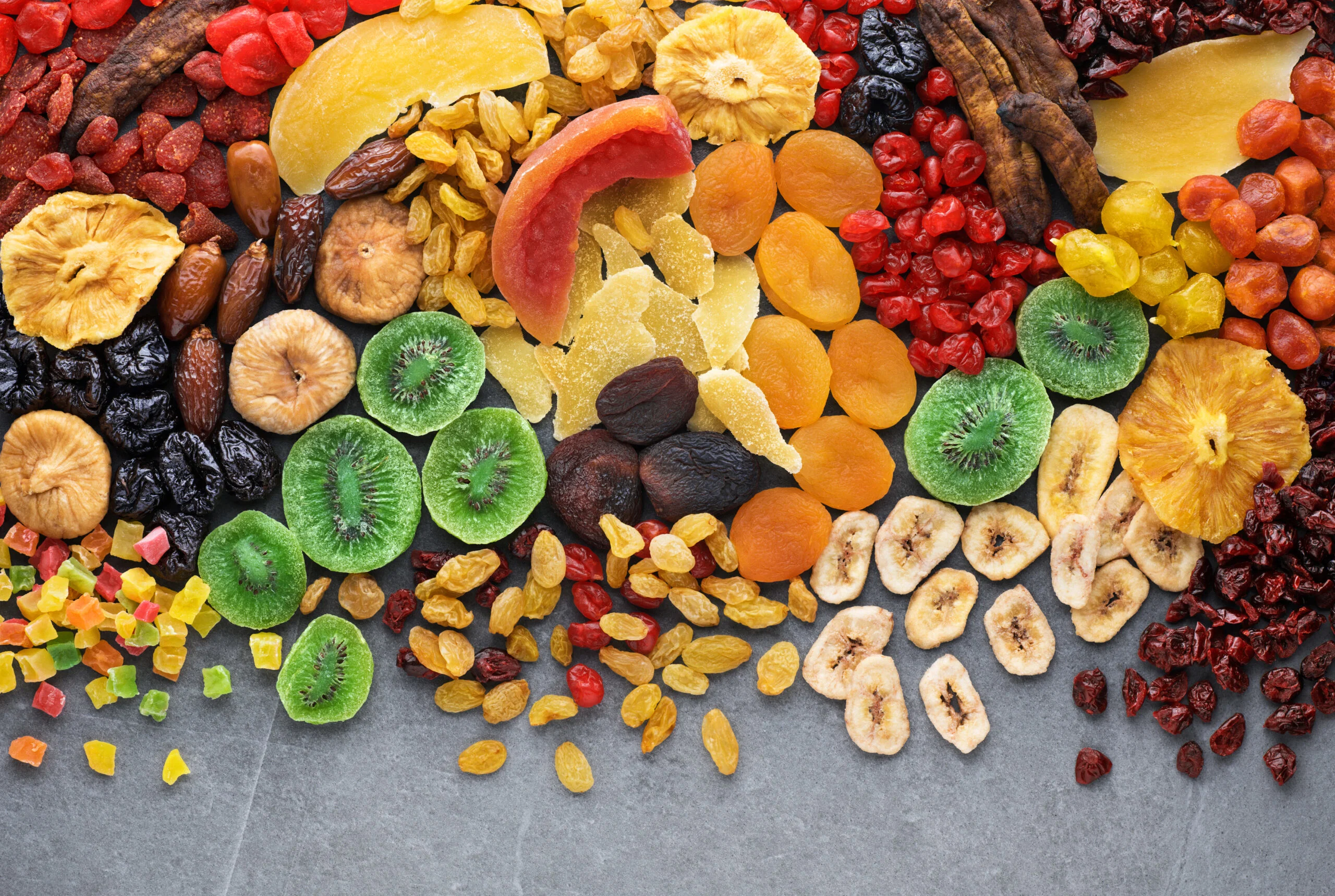
Dehydrated Vegetables and Fruits
1. Introduction
Dehydrated vegetables and fruits are products from which moisture has been removed under controlled conditions to extend shelf life and prevent microbial growth. Dehydration reduces weight and volume while preserving nutritional and sensory characteristics.
2. Raw Materials
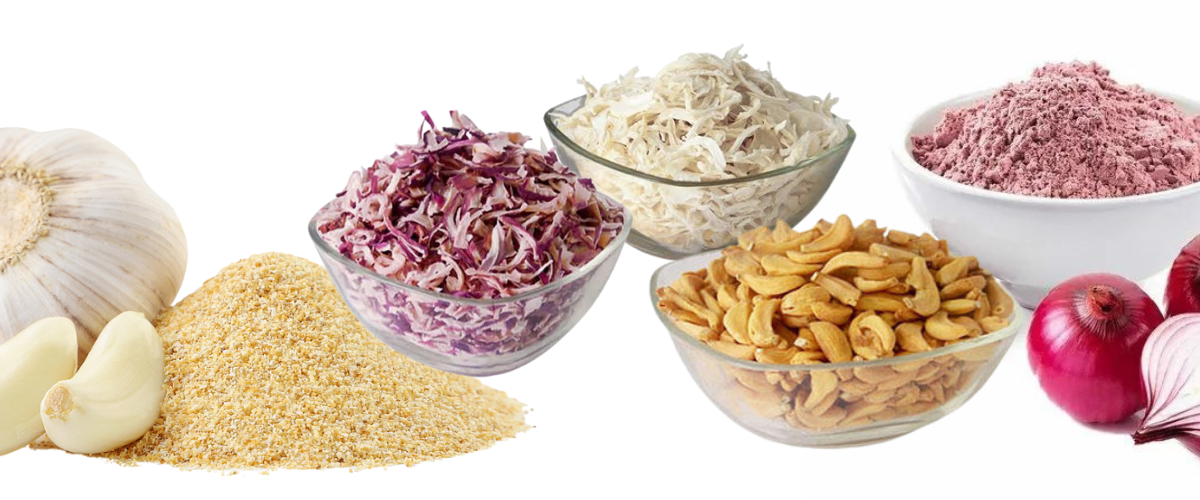
Fresh, mature, sound fruits and vegetables free from infestation and foreign matter are used. Common products include onion flakes/powder, garlic powder, tomato powder, green peas, carrot, spinach, mango slices, banana chips, and apple slices.
3. Processing Method
• Sorting and grading
• Washing and peeling
• Cutting/slicing
• Blanching (vegetables)
• Drying (sun, tray, hot air, vacuum, spray, or freeze drying)
• Grinding/sieving (for powders)
• Metal detection and hygienic packing
4. Physical Parameters
Moisture: 4–8% (vegetables), 5–15% (fruits), Color: Natural characteristic color, Odor: Typical to product, Texture: Crisp or free-flowing, Particle Size: As per customer requirement
5. Chemical Parameters
Total Ash, Acid Insoluble Ash %, Sulphur Dioxide (if used): Brix & pH: Product specific
6. Microbiological Parameters
Total Plate Count: As per FSSAI standards, Y& M, within permissible limits. coli: Absent Salmonella: Absent
7. Packaging & Storage
Packed in food-grade laminated pouches or HDPE bags with an inner liner. Store in a cool, dry place below 25°C and relative humidity below 60%. Shelf life: 9–18 months, depending on moisture and packaging.
8. Regulatory Compliance
Complies with FSSAI standards, Codex guidelines, and export regulations as applicable.
9. Laboratory Testing Scope
Moisture, Ash, Acid Insoluble Ash, SO₂, Microbiological analysis, Heavy metals, Pesticide residues (if required), and Aflatoxin (if applicable).